'%20stroke-width='0.753918'/%3e%3cpath%20d='M30.7501%204.71421C30.3438%204.30818%2029.6119%204.15078%2028.499%204.36066C27.4005%204.56784%2026.0265%205.11803%2024.4635%205.98065C21.3419%207.70349%2017.5434%2010.629%2013.8189%2014.3534C10.0943%2018.0779%207.16839%2021.877%205.4455%2024.9986C4.5829%2026.5616%204.03268%2027.9357%203.8255%2029.0341C3.61564%2030.147%203.77303%2030.8789%204.17906%2031.2853C4.58534%2031.6915%205.31772%2031.8494%206.43089%2031.6395C7.52933%2031.4323%208.90338%2030.8821%2010.4664%2030.0195C13.588%2028.2966%2017.3871%2025.3707%2021.1116%2021.6461C24.8361%2017.9216%2027.7615%2014.1231%2029.4844%2011.0015C30.347%209.4385%2030.8972%208.0645%2031.1044%206.96604C31.3143%205.85283%2031.1564%205.1205%2030.7501%204.71421Z'%20stroke='url(%23paint1_linear_23_66681)'%20stroke-width='0.753918'/%3e%3cpath%20d='M79.4874%208.68183C83.3041%208.68183%2085.6896%2010.7161%2086.0411%2014.1311H83.4552C83.0534%2011.8712%2081.7472%2010.841%2079.3868%2010.841C77.1774%2010.8411%2075.8722%2011.7706%2075.8722%2013.3273C75.8722%2014.6078%2076.6251%2015.3861%2078.5333%2016.0139L81.8224%2017.0686C84.8857%2018.0478%2086.2921%2019.68%2086.2921%2022.216C86.2921%2025.43%2083.9824%2027.2628%2079.965%2027.2629C75.5959%2027.2629%2072.9091%2025.1037%2072.4572%2021.2619H75.0431C75.3695%2023.7728%2077.1021%2025.1037%2080.0148%2025.1037C82.4504%2025.1037%2083.7315%2024.1747%2083.7316%2022.4924C83.7316%2021.011%2082.9279%2020.2073%2081.1202%2019.6047L77.9806%2018.6008C74.7667%2017.5713%2073.3107%2016.064%2073.3107%2013.6535C73.3108%2010.6405%2075.7463%208.68191%2079.4874%208.68183ZM62.4376%208.9582C68.2631%208.9582%2072.0548%2012.4986%2072.0548%2017.9475C72.0548%2023.3963%2068.2132%2027.0373%2062.463%2027.0373H56.0851V12.0715L59.1984%208.9582H62.4376ZM109.99%2016.8674L115.063%208.9582H118L111.195%2019.1525V27.0373H108.533V19.1525L101.934%209.26679L92.9982%2017.6457L102.766%2027.0373H99.0245L90.2111%2018.2492V27.0373H87.549V11.4953L90.2111%209.01679V17.0939L98.6222%208.9582H104.943L109.99%2016.8674ZM52.9113%2020.9357H55.0704V23.1203H52.9113V24.2297L50.174%2026.967V23.1203H41.2599V21.0861L50.2745%208.9582H52.9113V20.9357ZM58.7472%2024.8273H62.4376C66.7564%2024.8273%2069.3427%2022.0154%2069.3429%2017.8977C69.3429%2013.855%2066.8067%2011.1682%2062.4376%2011.1682H58.7472V24.8273ZM44.4484%2020.9357H50.2745V13.0256L44.4484%2020.9357Z'%20fill='white'/%3e%3cdefs%3e%3clinearGradient%20id='paint0_linear_23_66681'%20x1='4.68353'%20y1='4.96169'%20x2='31.0171'%20y2='31.5521'%20gradientUnits='userSpaceOnUse'%3e%3cstop%20stop-color='white'/%3e%3cstop%20offset='0.332545'%20stop-color='white'%20stop-opacity='0'/%3e%3cstop%20offset='0.475962'%20stop-color='white'%20stop-opacity='0'/%3e%3cstop%20offset='0.635103'%20stop-color='white'%20stop-opacity='0'/%3e%3cstop%20offset='1'%20stop-color='white'/%3e%3c/linearGradient%3e%3clinearGradient%20id='paint1_linear_23_66681'%20x1='30.2464'%20y1='4.96169'%20x2='3.91291'%20y2='31.5521'%20gradientUnits='userSpaceOnUse'%3e%3cstop%20stop-color='white'/%3e%3cstop%20offset='0.328405'%20stop-color='white'%20stop-opacity='0'/%3e%3cstop%20offset='0.475962'%20stop-color='white'%20stop-opacity='0'/%3e%3cstop%20offset='0.633235'%20stop-color='white'%20stop-opacity='0'/%3e%3cstop%20offset='1'%20stop-color='white'/%3e%3c/linearGradient%3e%3c/defs%3e%3c/svg%3e)
Sensor onboarding
Quick start guide
Everything you need to get your Jetvision Air!Squitter running in no time. Read the instructions carefully before you begin.
To register your device go to app.4dsky.com and follow the device setup wizard.
00Package contents
Contents of your package
- Jetvision Air!Squitter66921 #1801-1862Qty 1
- Wifi Antenna, RP-SMA-male66912Qty 1
- Int Plug In Power Supply (Level V1), Universal66901Qty 1
- 1090MHz ADS-B + GNSS Antenna67960Qty 1
- 5m LAN Cable (Blue)70003Qty 1
- (OPTIONAL) 978MHz UAT Antenna (USA only)67080Qty 1
- (OPTIONAL) 868MHz Flarm Antenna (rest of the world)69206Qty 1
- Aluminium Mast Clamp (32mm Antenna)67204Qty 1 or 2
- 10m Coax Cable N-male/SMA-male (Black)70410Qty 1 or 2
01Step 1
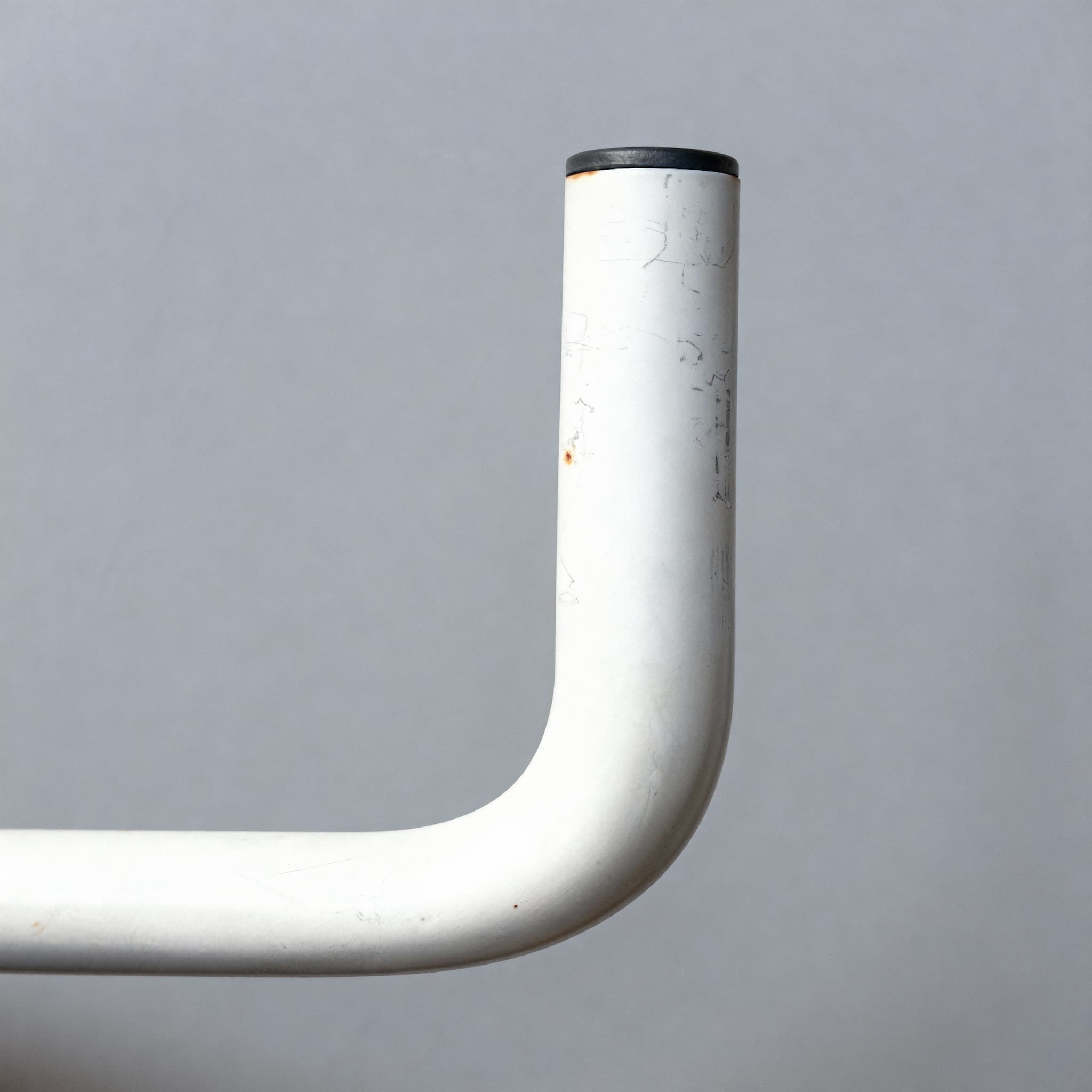
Prepare the mast
The supplied elements ensure attachment to an antenna mast with a diameter of up to 60mm.
02Step 2
Attach the antenna holder to the mast
Antenna mount.
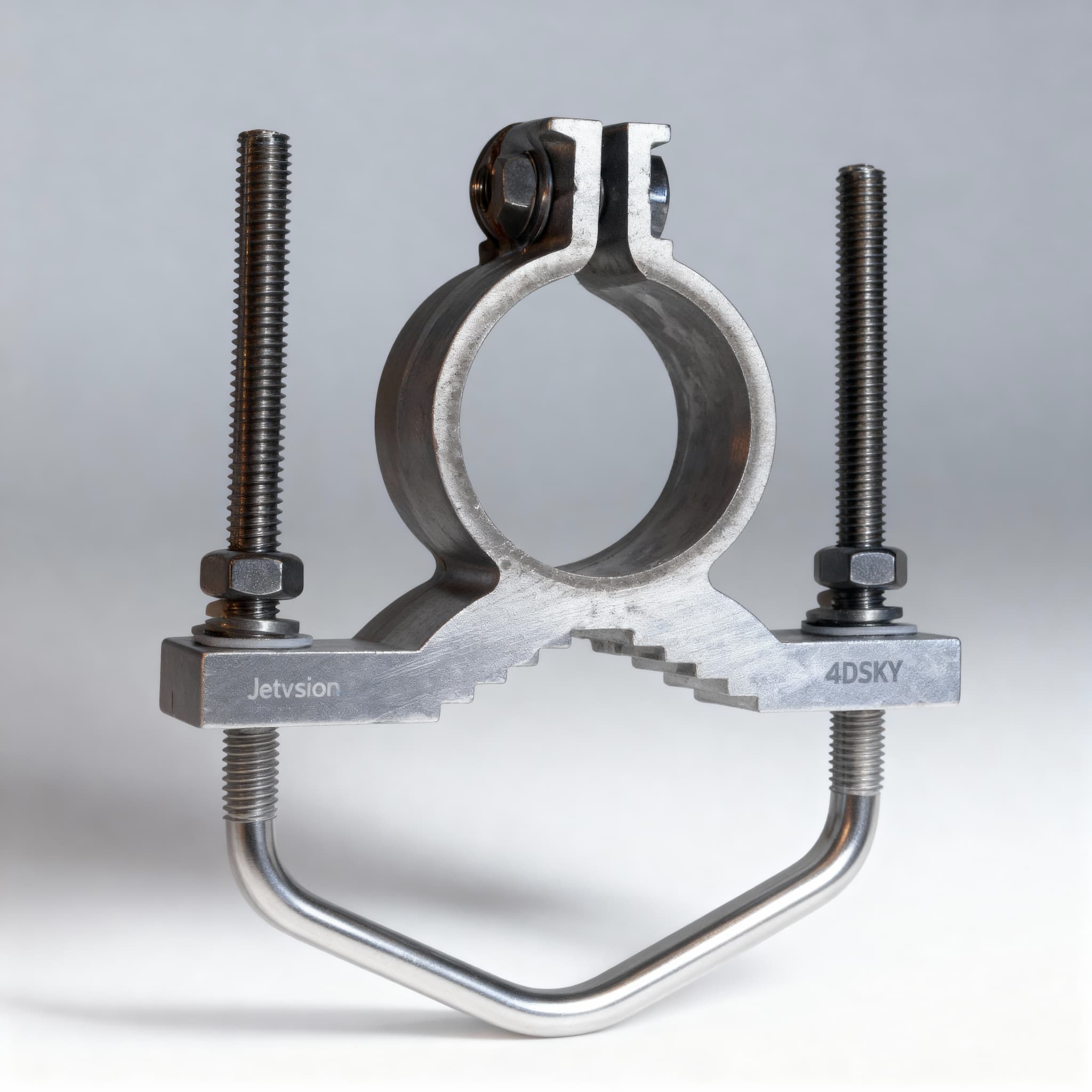
Attach the antenna mount to the mast, ensuring it is placed level and that the nuts are at a similar distance.
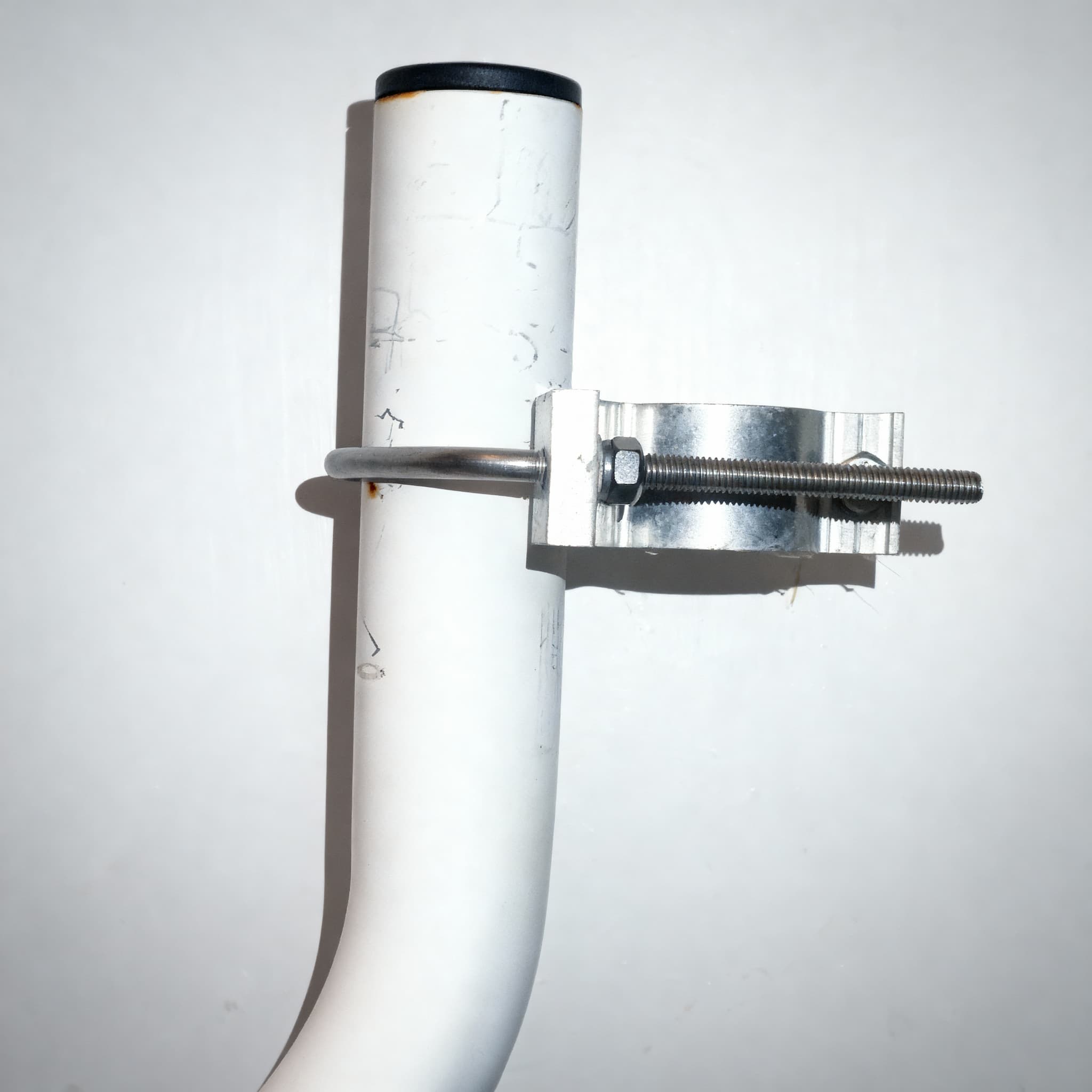
Tighten the nuts evenly, so the mount is securely fixed and level against the mast.
The mast and bracket should be grounded according to the original Jetvision instructions. A scan of the original manual is available here.
03Step 3
Insert the antenna into the holder
Check the antenna label: ADS-B 1090MHz & GPS.
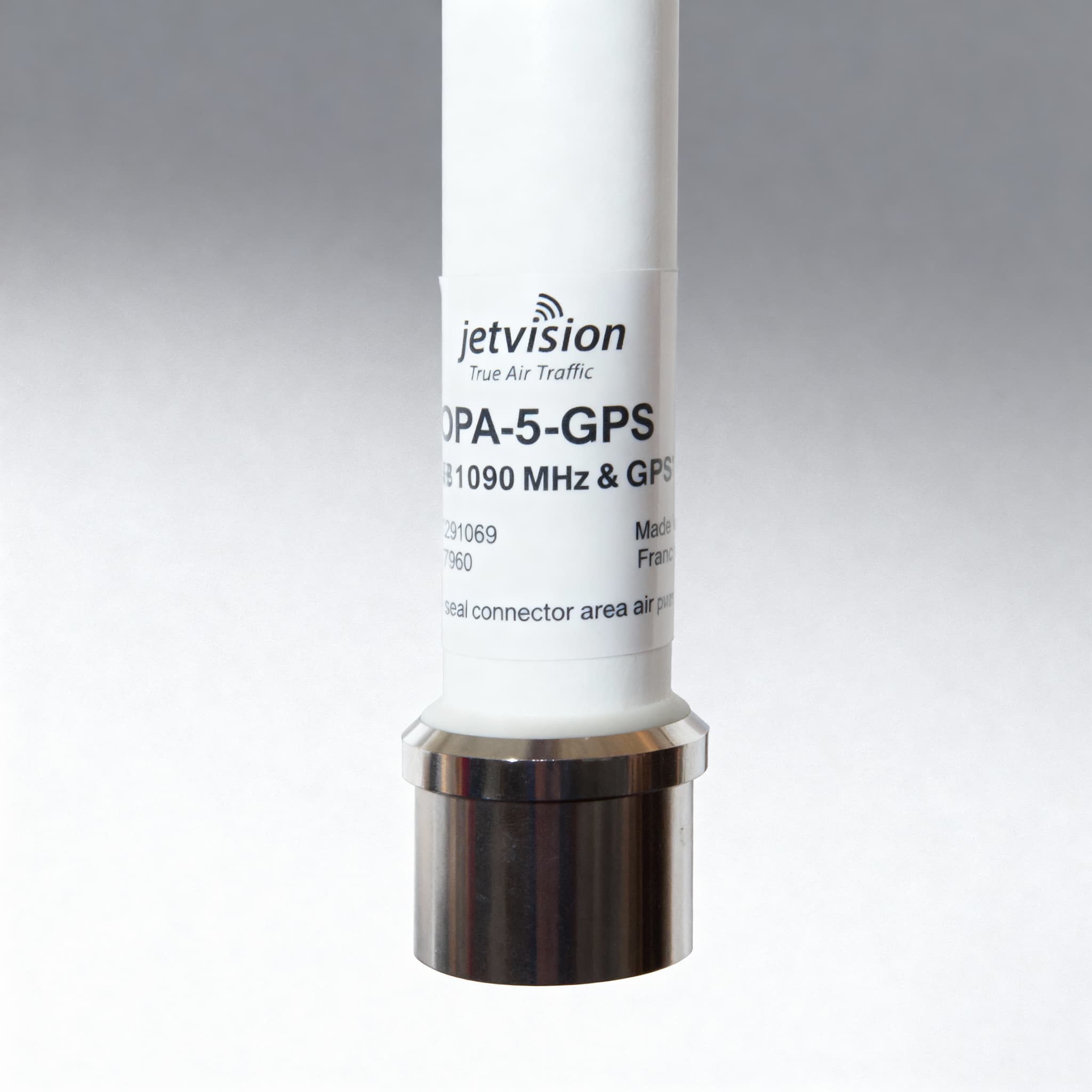
Insert the antenna carefully into the mount.
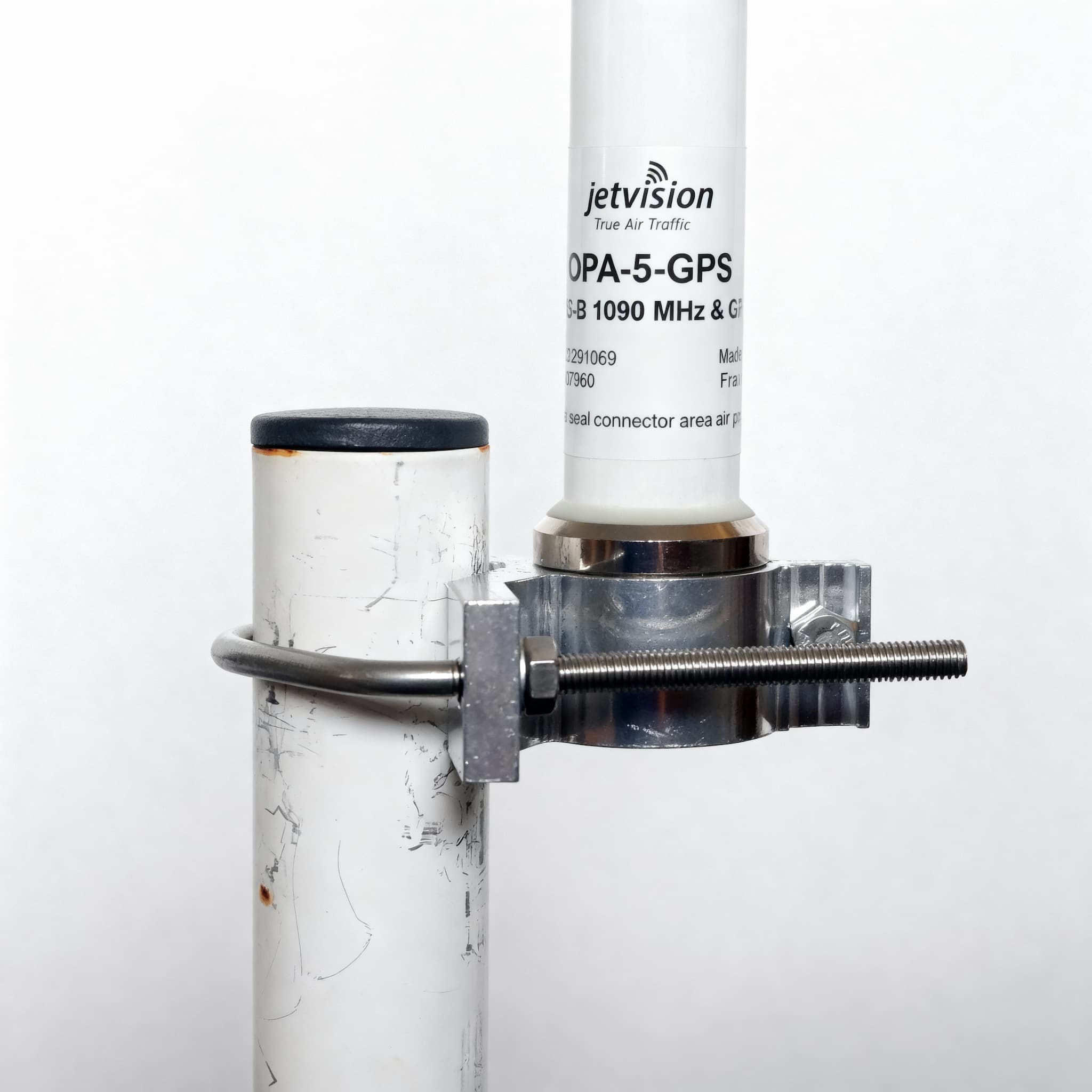
Tighten the antenna clamp.
04Step 4
Connect the cable to the antenna
Using the large connector on the cable, insert into the antenna and firmly tighten to ensure a waterproof seal.
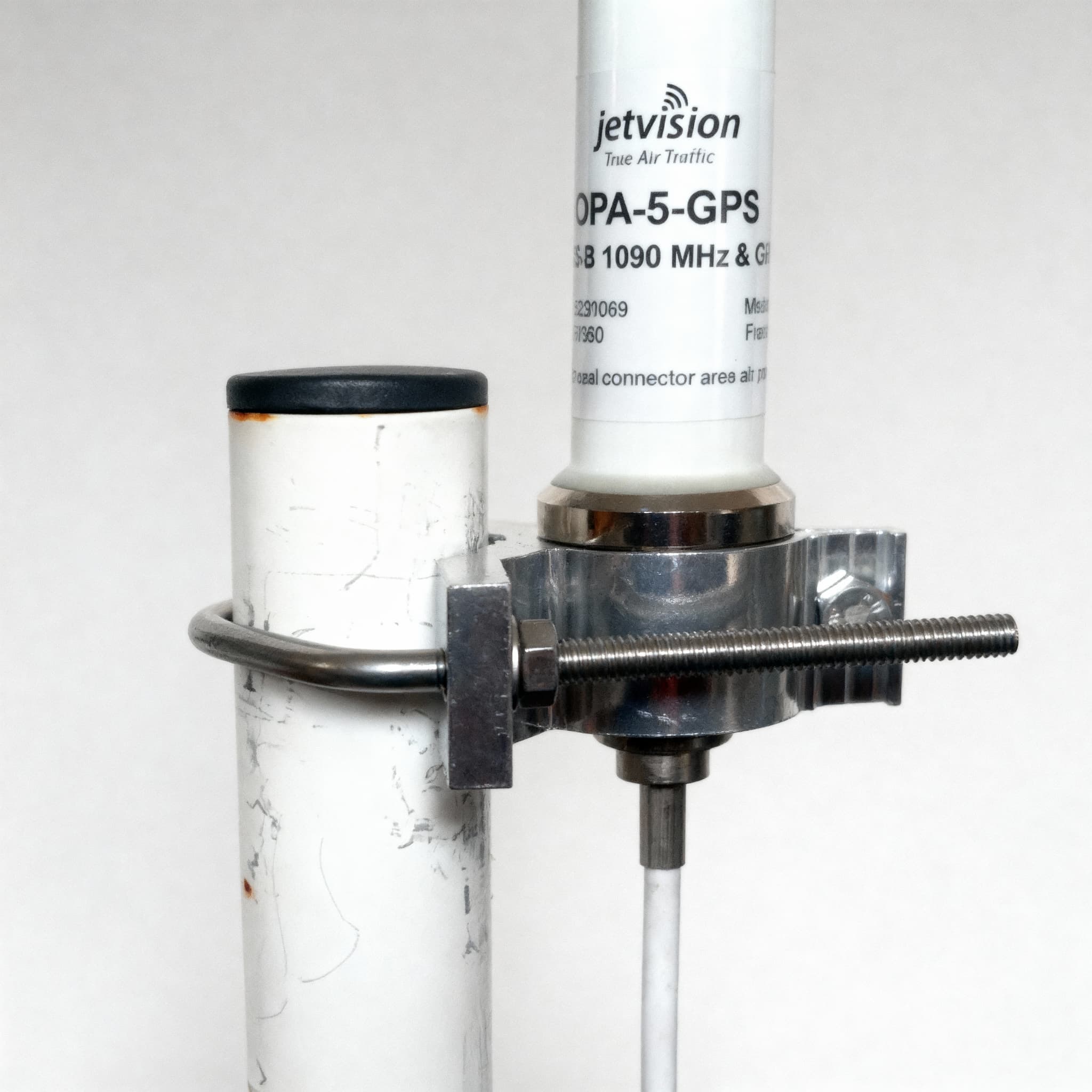
Make a soft loop on the cable to remove tension from the connection.
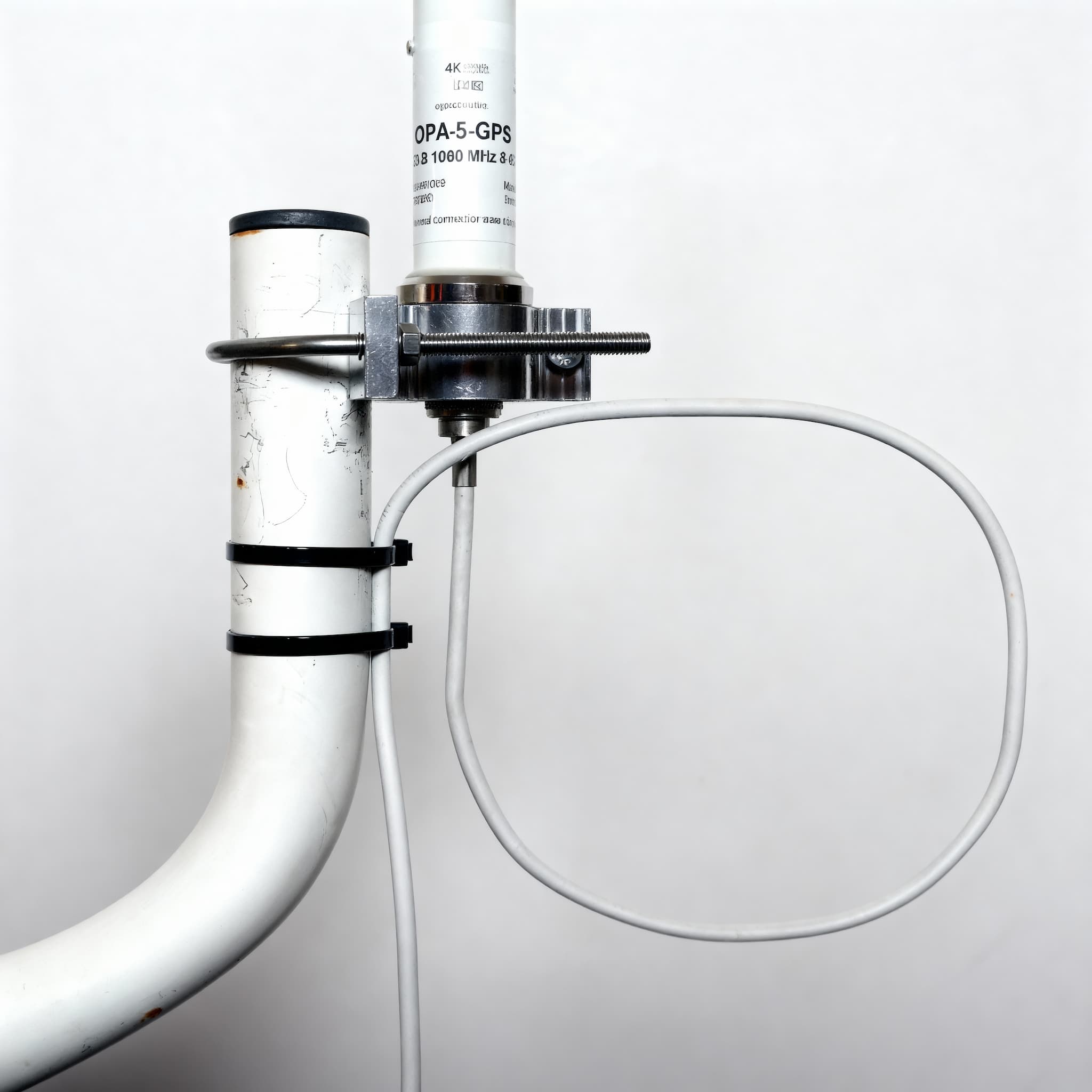
Secure the cable to the mast using at least two cable ties, then cut off the protruding ends with side cutters.
05Step 5
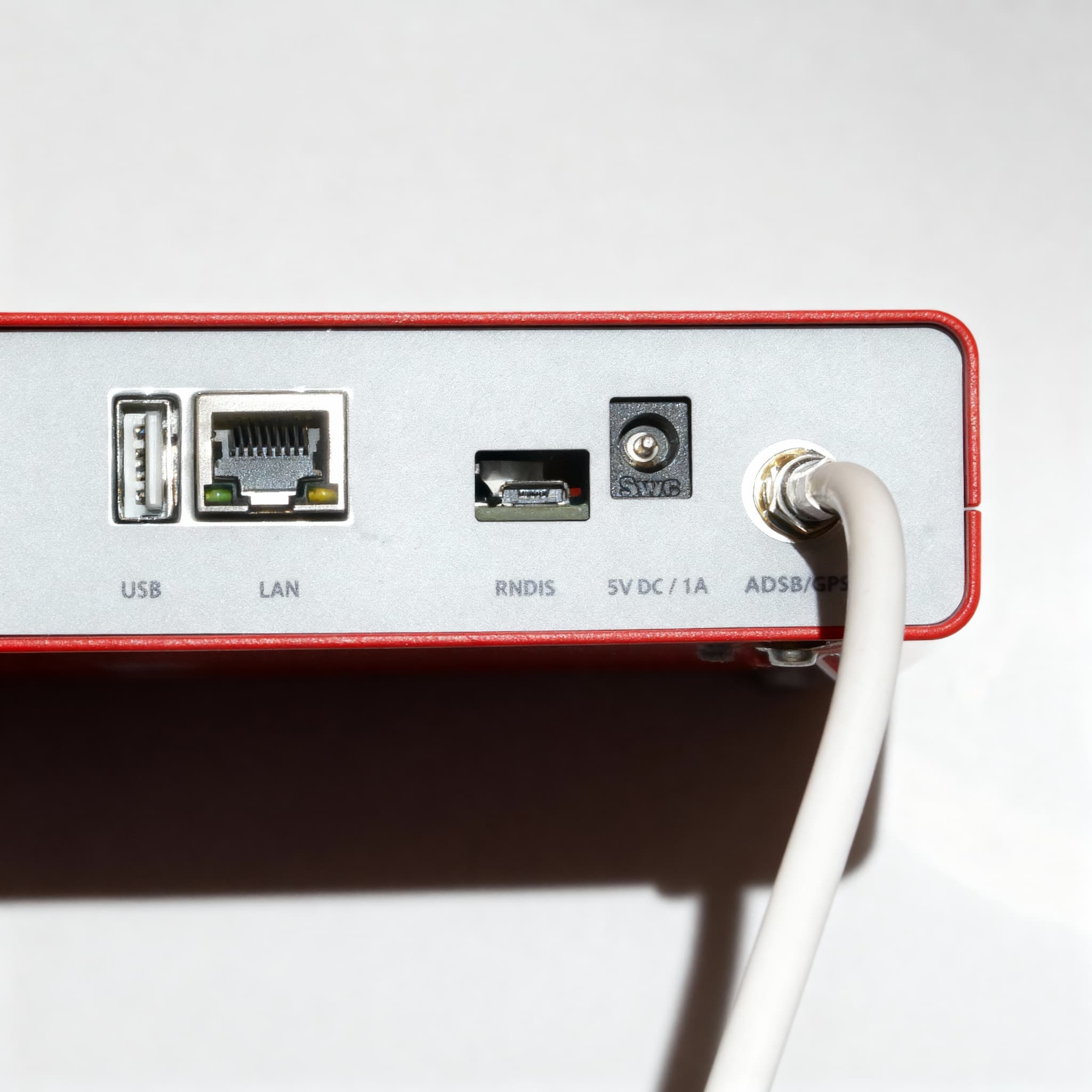
Connect the antenna cable to the Air!Squitter
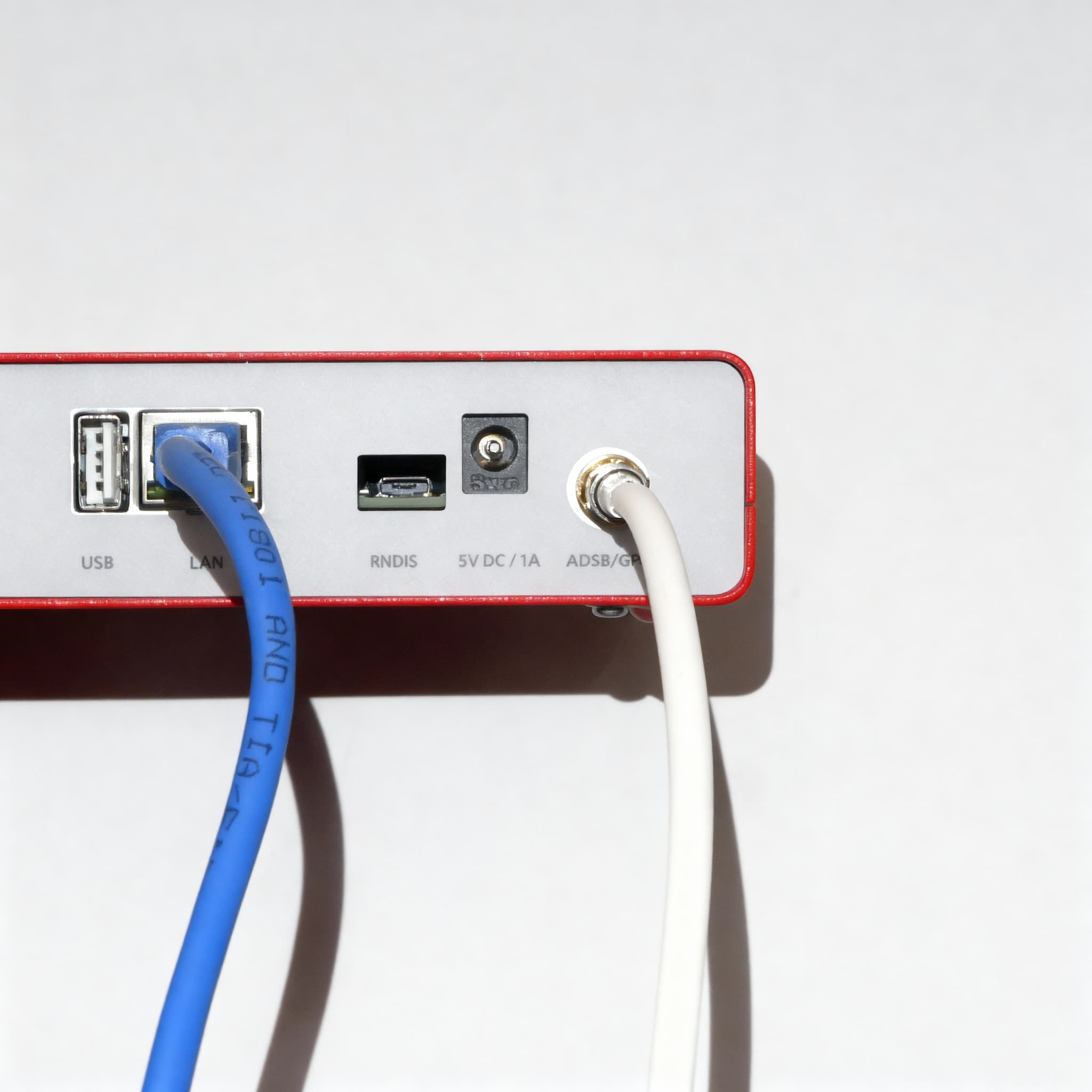
After attaching the cable to the ADS-B antenna, feed the remaining cable inside the building via a safe portal and connect it to the Air!Squitter device. Using the small connector on the cable, connect to the Air!Squitter via the ADS-B/GPS port. The connector should be finger tight. (Note: make sure you attach the ADS-B/ GPS antenna to the ADS-B/ GPS port on the Jetvision sensor. If you have a 2nd antenna, do exactly the same procedure, but attach it to the Flarm/ UAT port on the sensor instead.
06Step 6
Connect the Air!Squitter to the internet
Using the blue LAN cable, connect to the Air!Squitter via the LAN port. Plug the other end straight into your router for initial setup. You can switch it to wi-fi later.
07Step 7
Connect the device to the power supply
The power supply and the UK 3 pin adapter are shown for demonstration purposes only — use the country specific adapter provided. NOTE: DO NOT USE YOUR OWN POWER SUPPLY AS YOU CAN DESTROY THE SENSOR
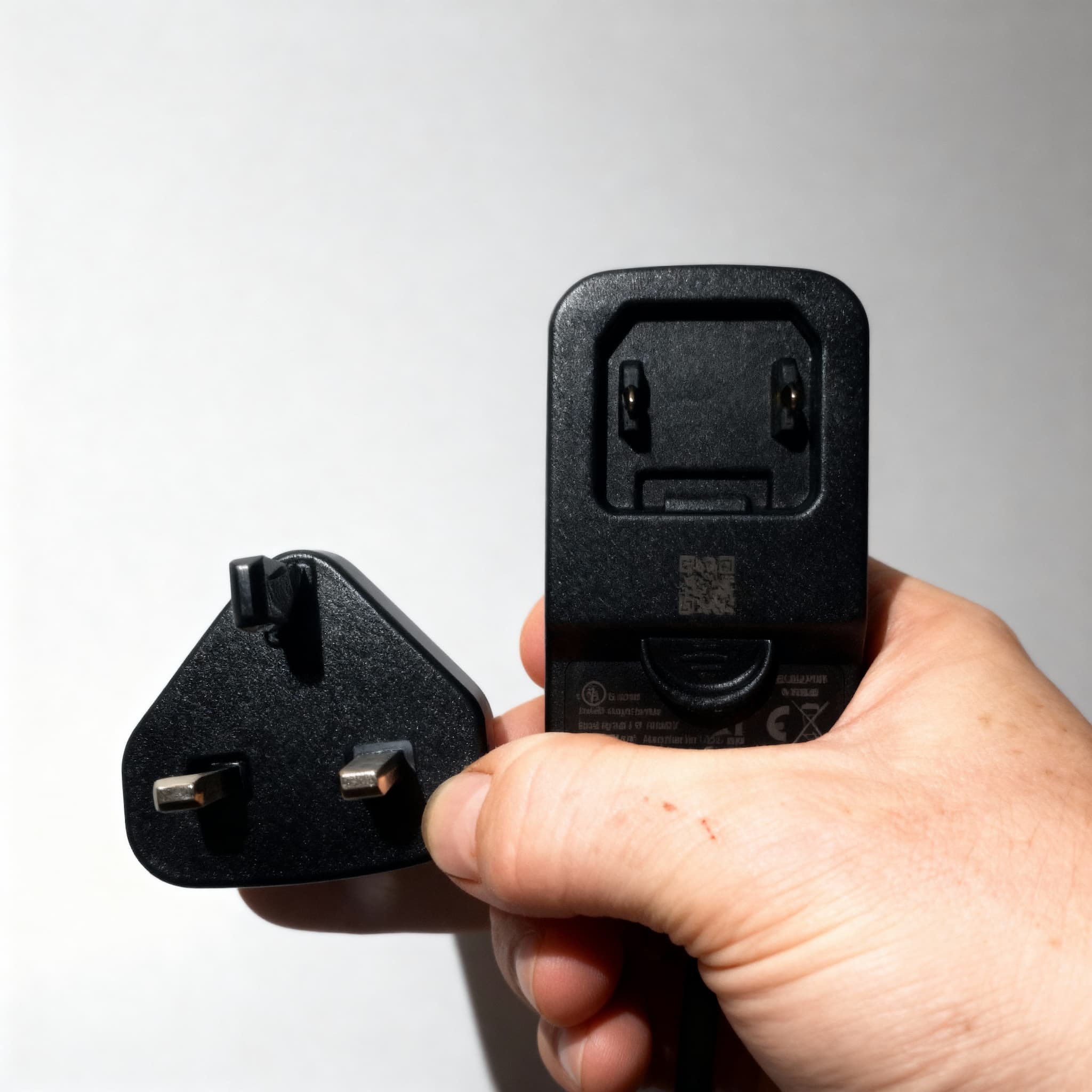
Insert the adapter carefully from the top and slide down until you hear an audible click, confirming it is seated correctly.
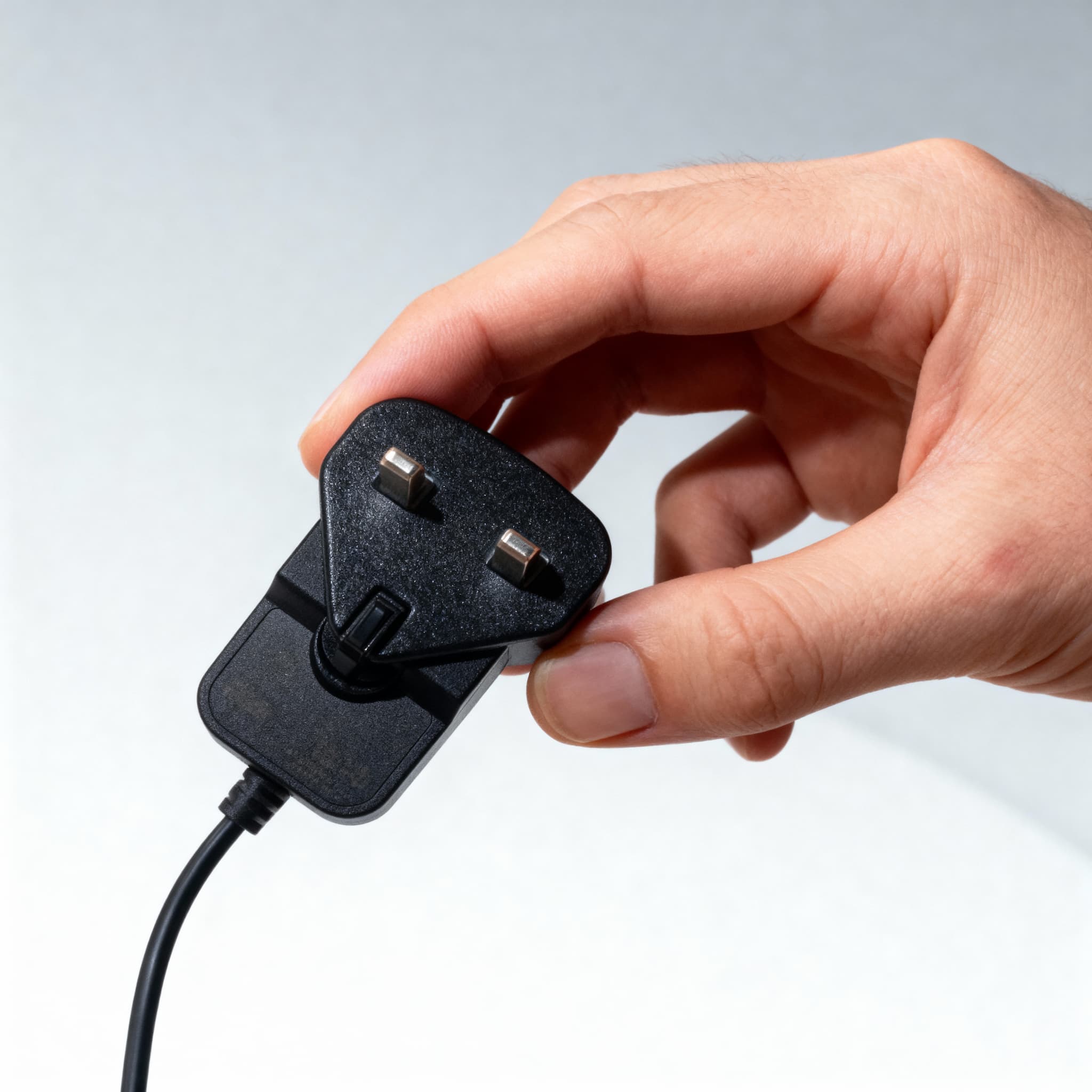
Plug the power supply into the port marked 5V DC 1/A, then plug the power supply into a mains socket (not an extension lead).
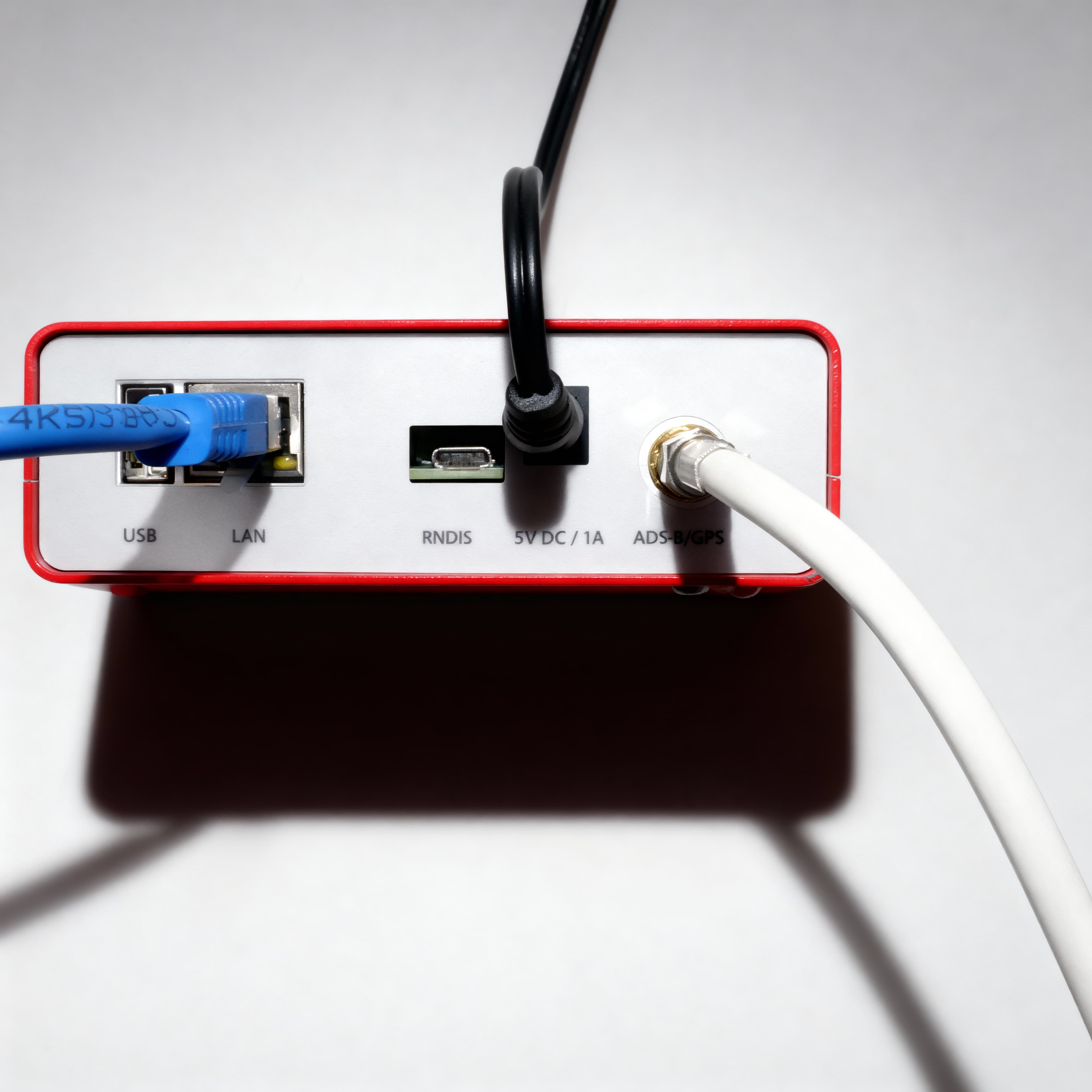
Repeat the procedure with the second antenna supplied and connect it to the Air!Squitter Flarm/UAT port. The antennas must be a minimum of 25cm apart.
Only use the ethernet method to set up your Jetvision. Do not use the micro-USB, as this does not work. If you plan to use wi-fi, configure your wi-fi network over ethernet first, then move your device closer to your antennas and complete setup.
- 01Power the sensor with the supplied power cable.
- 02Plug the Air!Squitter sensor into your router via ethernet cable.
- 03Click the black button on the front of the sensor until you see an IP address on the small LED screen (it should look something like 192.168.1.xxx).
- 04Type this into a browser window on another device (e.g. phone or laptop) that is connected to the same router.
- 05You should arrive at the home screen of your Air!Squitter.
- 06Go into network settings to configure your wi-fi with the network name and password.
- 07You should now be connected to the internet.
If you are having any issues, please see our troubleshooting guide or open a ticket on our Discord channel and a member of our team will be in touch as soon as possible.
09Step 9
Register your sensor on the 4DSKY app
Register your sensor on the 4DSKY app to receive and track your bonus points, and view aircraft and sensor metadata in real time — all within a modern 3D interface.
10Step 10
Connecting to Neuron
The video below is retained for reference. The current route is to go to app.4dsky.com and follow the setup wizard.
Summary
To connect your sensor to the Neuron network, go to explorer.neuron.world and create your device account to obtain a private key.
Once you have your device account number and private key, insert them into your sensor. Connect to your sensor by visiting the following address and following the wizard:
http://<your-sensor-IP>:1337
Find your sensor's local IP address by pressing the button on the front of the sensor a few times until you reach the "LAN" or "Wi-Fi" screen, depending on your connection type. The IP address is shown at the top of that screen and has the format 192.168.1.XXX.
Once complete, your sensor will appear in the 4DSKY Explorer. You may need to wait five minutes for it to refresh.
11Troubleshooting and support
If something isn't working.
Support ticket
Reach out to our support team and we will get back to you as soon as possible.
Join our community
Can't find the answer you're looking for? Join our Discord community for live help from the 4DSKY team and other sensor hosts.